Wastewater Chlorinators

Required disinfection devices for aerobic septic systems using surface disposal — what they are, how they work, and which type makes sense for your home.

TCEQ requirement: Texas law mandates a disinfection device on all septic systems using surface disposal. Approved options include tablet chlorinators, liquid chlorinators, ultraviolet light, and ozone systems.

Tablet Chlorination

The most common disinfectant device found on aerobic septic systems. Based on household water usage, expect to use approximately one tablet per person each month at roughly $2.00 per tablet.

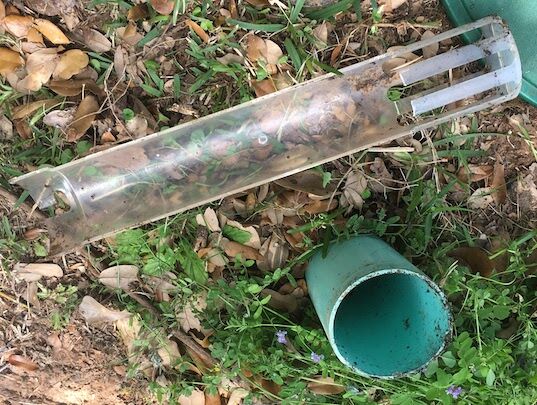
Tablet dispenser installed in septic system

Typical installation: A vertical tube dispenser sits in a horizontal pipe, with effluent flowing past tablets to achieve chlorine residual of 0.1 parts per billion.

Septic tablet chlorinator diagram

How it works: Tablets rest in a tube; as the bottom tablet dissolves, gravity pulls the next one down until the dispenser is empty.

Essential Guidelines

Do's & Don'ts for Tablet Chlorination

✓ DO

  • • Use only septic-grade calcium hypochlorite tablets
  • • Inspect weekly to ensure tablets are present
  • • Add 2–5 tablets at a time (never more than one tablet per person per month)
  • • Wash out blockage if necessary
  • • Use gloves and work in a well-ventilated space when handling

✗ DON'T

  • • Never use swimming pool chlorine tablets
  • • Don't combine wastewater and pool tablets (explosive compound forms)
  • • Don't overfill the dispenser tube (causes bridging and blockage)
  • • Don't store tablets near gasoline (vapors can spontaneously combust)

EPA Warning

Federal fine for using pool chlorine: The Environmental Protection Agency prohibits the use of swimming pool tablets (trichloroisocyanuric acid) in wastewater systems. First offense: $500 fine. Subsequent offenses: $2,000 per violation.

Pool chlorine is designed to resist sunlight breakdown. When used in septic systems, it persists in soil and can create antibiotic-resistant bacteria, threatening drinking water and wastewater treatment infrastructure nationwide. Septic-grade calcium hypochlorite breaks down naturally in sunlight.

Why We Don't Offer Tablet Refill Service

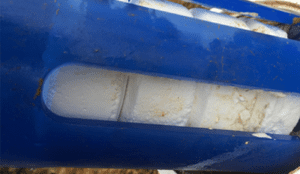
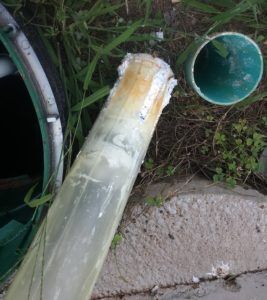
Septic tablets stuck in dispenser tube showing bridging effect

Advanced Aerobic Systems does not provide a tablet refill service. Two technical reasons explain why this approach is unreasonable:

1. Tablets are hygroscopic and expand

Wastewater chlorine tablets absorb moisture from the air. Inside the humid environment of a septic tank, tablets expand over one to two months. Adding 15 or more tablets during a single visit (to provide the recommended 2–5 tablets per month) causes "bridging" — tablets stick to the dispenser walls, preventing them from dropping and dissolving.

2. Tablets degrade and lose potency over time

Chlorine tablets have a limited shelf life. Leaving tablets in the dispenser for months reduces their effectiveness, eventually leaving filler material with minimal chlorine content. This results in inadequate disinfection of wastewater spraying onto your lawn.

If your current maintenance provider offers a tablet service, verify they visit monthly and follow Texas A&M AgriLife guidelines.

Liquid Chlorination

Liquid chlorinators (LQCs) dispense 6% household bleach (calcium hypochlorite) before, during, or immediately after pumping to the spray field. Chlorine residual concentration varies by type, ranging from 0.2 to 2.0 parts per billion — 2 to 20 times stronger than tablet systems.

Contact time determines effectiveness

The most important factor in liquid chlorination is chlorine contact time with microbes in the water. Systems dispensing bleach during pump-out have the least contact time. Dispensing immediately after pump-out provides diminishing contact until the next cycle. Dispensing bleach as effluent enters the pump tank meters bleach as needed, yielding maximum contact time and optimal chlorine residual.

Why We Recommend Liquid Over Tablets

Practical advantages

  • • Easier to find (household bleach at any store)
  • • Easier to use (lasts up to 4 months)
  • • Safer to handle and store
  • • 2 to 20 times the chlorine residual

Economic benefits

  • • Less expensive over time
  • • Typically pays for itself in 2 years
  • • Lower long-term cost despite higher initial investment
  • • Professional refill service available

Our recommendation: LBC Manufacturing EZ-Tank Liquid Chlorinator. We do not recommend ozone or ultraviolet light systems due to excessive cost.

Service Option

Advanced Aerobic Systems provides a liquid chlorine refill service with each of the three annual inspections (one refill every 4 months). When activating your maintenance contract, select "LQC Refill Service" to add this option.

Liquid Chlorinator Types

Each type uses a different mechanism to dispense bleach. All store liquid chlorine in an exterior reservoir connected to an internal component via a small tube.

Gravity Flow — EZ-Tank
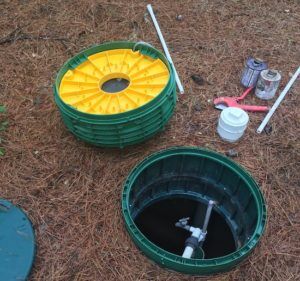
Installing an EZ-Tank chlorinator in septic system

A vacuum-sealed reservoir fits securely inside the riser, resulting in a clean installation. A small pipe extends into the effluent inside the tank.

As more effluent flows in from your home, it raises the water level inside the small pipe, pushing air through a tube to the top of the reservoir. This causes a small amount of bleach to drip into the tank.

The simple gravity-flow design requires no venturis or moving parts — a reliable, long-lasting solution.

Visit manufacturer site
Drop-Pressure Dosing — Clearstream

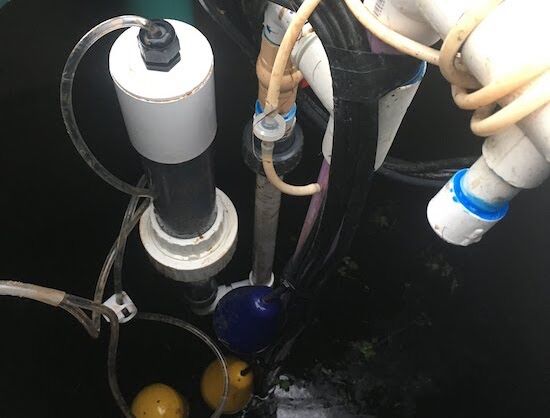
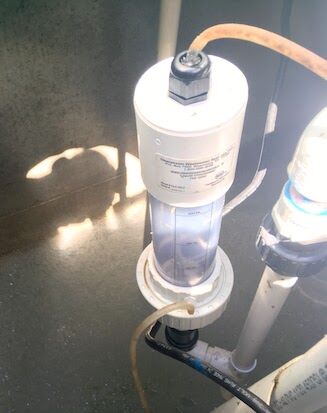
Clearstream liquid chlorinator installed on septic system

A small chamber connects to the pressurized line leading to the spray field. Water pressure from the pump pushes a ball against a vertically positioned o-ring, sealing the small chamber above.

The tube from the reservoir connects to this chamber. With the bottom blocked, the chamber fills with bleach. When the pump turns off, pressure releases, the ball falls away from the o-ring, and bleach drops into the pump tank.

A secondary ball inside the chamber prevents continuous pouring.

Visit manufacturer site

Venturi — LBC-500

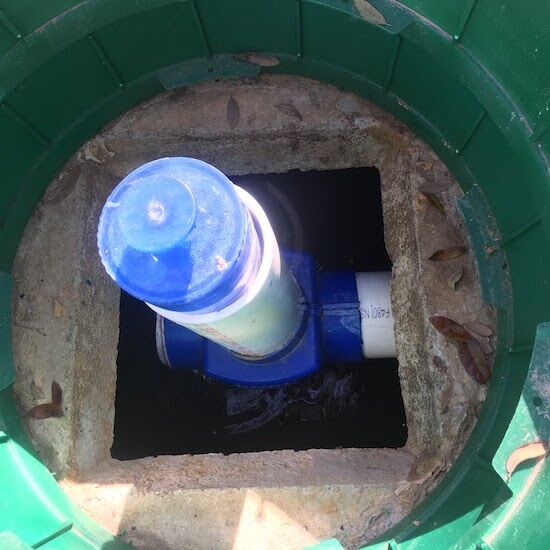
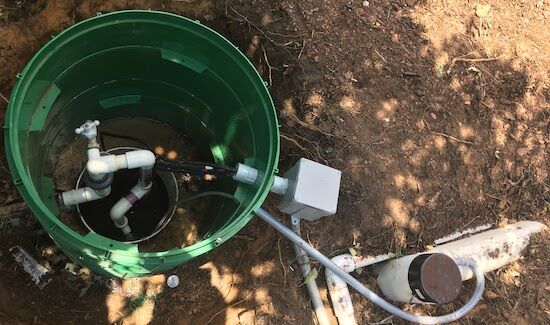
Venturi chlorinator installation in progress

The internal component is a venturi device connected to the line from the pump.

Water pressure from the pump flows through the venturi and pulls a vacuum on the small tube connected to the reservoir, drawing bleach along with it into the pump tank.

Utilizes the Venturi effect — fluid velocity creates negative pressure that pulls bleach from the reservoir.

Visit manufacturer site

Chlorinator Comparison

Side-by-side analysis of tablet versus liquid chlorination systems — upfront cost, maintenance requirements, effectiveness, and long-term value.

Tablet chlorinator comparison

Tablet Chlorinators

Advantages

  • • No up-front costs — typically included with system
  • • Can be cost-effective with few occupants and low water usage

Disadvantages

  • • Must be manually cleaned and refilled every month
  • • Can be difficult to find septic tablets depending on location
  • • Tablets absorb moisture and release dangerous fumes if stored improperly
  • • Expensive over time (more water use = more tablets)
  • • Many refill services don't supply adequate chlorination

Design note: Tablet chlorinators use a vertical tube dispenser resting in a horizontal pipe. Effluent flows past tablets, dissolving them. Only add tablets needed for the month — overfilling causes bridging (tablets stick in the tube).

Liquid chlorinator comparison

Liquid Chlorinators

Advantages

  • • Treats wastewater up to 20 times better than septic tablets
  • • Can store over 3 months of bleach (depending on model and usage)
  • • Uses inexpensive household bleach — easily refillable
  • • Refills can be done effectively by maintenance provider

Disadvantages

  • • Many aerobic septic systems don't include an LQC — upfront installation cost required
  • • (Most homeowners save money long-term due to cheaper refills)

Design note: Liquid chlorine (household bleach) is held in an exterior reservoir connected to an internal component via a small tube. The internal component determines the type, function, and reliability of the chlorinator.

Feature Tablet Liquid
Initial cost $0 (typically included) $400–800
Monthly cost (avg) $6–10 $2–4
Refill frequency Every month Every 3–4 months
Chlorine residual 0.1 ppb 0.2–2.0 ppb
Effectiveness Baseline 2–20× stronger
ROI timeline ~2 years

Questions about chlorination for your system?

Talk to a licensed specialist who can recommend the right chlorination solution for your household size, water usage, and budget.

MP0001301 OS0003120 Rosharon & Brazoria County